Discover Italy: Your Ultimate Travel Guide for 2025
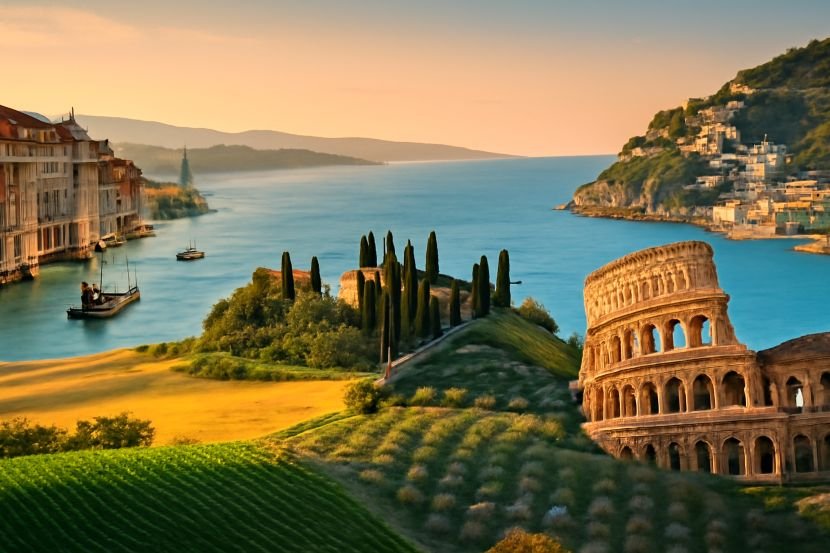
Italy — a landscape of ancient history, marvelous artworks, and incredible cusine. What other country can offer historical and cultural tangents and details on every street? Since time immemorial, visitors have dreamt of floating on a gondola in Venice, exploring Florence’s expansive arts, or sunbathing on the beautiful Amalfi Coast. This guide is for those visitors. As of 2025, the country is among the most valuable of the world’s economies and one of the most visited over the years, hosting over 5 million tourists yearly. In order to best enjoy the country, one must not only know the attractions but the economics of the country as a tourist. So, let’s explore the travel ins and outs of italy to ensure the best experience one can have in their adventures.
Italy’s Ever-Rising Appeal to Global Tourists
Italy’s charm never fades, no matter the season. Known for its incredible history, breathtaking landscapes, and rich culture, Italy remains at the top of many travel lists. In 2025, the country is expected to see around 146 million visitors, continuing its trend of popularity. From history buffs to foodies, Italy caters to every kind of traveller. Whether it’s the art-filled museums of Florence or the sun-kissed beaches of Sardinia, there’s something for everyone. But it’s not just the culture that draws people in — Italy’s strong tourism infrastructure plays a huge role. Despite facing some challenges in recent years, the country’s tourism industry continues to thrive.
Advertisement
The Tourism Industry: Where Tradition Meets Modernity
As of 2025, Italy’s tourism industry is booming, although it faces challenges typical of popular destinations. With an annual rise in arrivals, Italy’s tourism is seeing growth year after year. In 2024 alone, the country welcomed over 133.6 million visitors, with international travellers making up nearly half of that total. This surge in visitors means that tourism is an essential part of Italy’s economy, generating more than €55 billion in 2024. However, it’s not all smooth sailing. The country’s infrastructure struggles to keep pace with the growing numbers, and much of its tourism industry is still seasonal. Many businesses shut down outside the summer months, and hotel rooms remain scarce in peak seasons.
Hotel Industry: Where Charm Meets Challenges
If you’ve ever dreamed of staying in a charming Italian boutique hotel or a luxurious Tuscan villa, you’ll be thrilled with the variety of accommodations available in Italy. From five-star palaces to charming agriturismi (farm stays), Italy’s hotel scene offers something for every budget. However, the country’s hotel industry faces some unique challenges. For one, hotels tend to be on the smaller side, with many establishments offering fewer than 40 rooms. This smaller scale means fewer amenities but often results in a more intimate, local experience. But it’s not always perfect. Some hotels, particularly smaller, independent ones, can sometimes lack consistency in service.
For 2025, your best bet is to plan ahead if you’re visiting during peak tourist seasons, especially in major cities like Rome, Venice, and Florence. However, if you prefer a quieter, more authentic experience, consider visiting in the spring or autumn. The shoulder seasons (April to May and September to October) are perfect for avoiding the worst crowds, while still enjoying pleasant weather.
Cruise Industry: Sailing into Italy’s Waters
If you’re cruising through the Mediterranean, there’s no better place to make a stop than Italy. The country’s coastal beauty, paired with its rich cultural heritage, makes it a prime destination for cruise ships. Italian ports like Genoa, Naples, and Venice are some of the busiest in Europe. In 2024, Italian ports were expected to receive over 13.8 million cruise passengers, a number that continues to grow year on year. If you’re planning on exploring Italy by sea, be sure to check the specific ports included in your cruise itinerary. Not every cruise will allow you enough time to explore Italy’s mainland.